Let Them Trip First: My Approach to Mentoring Junior Developers
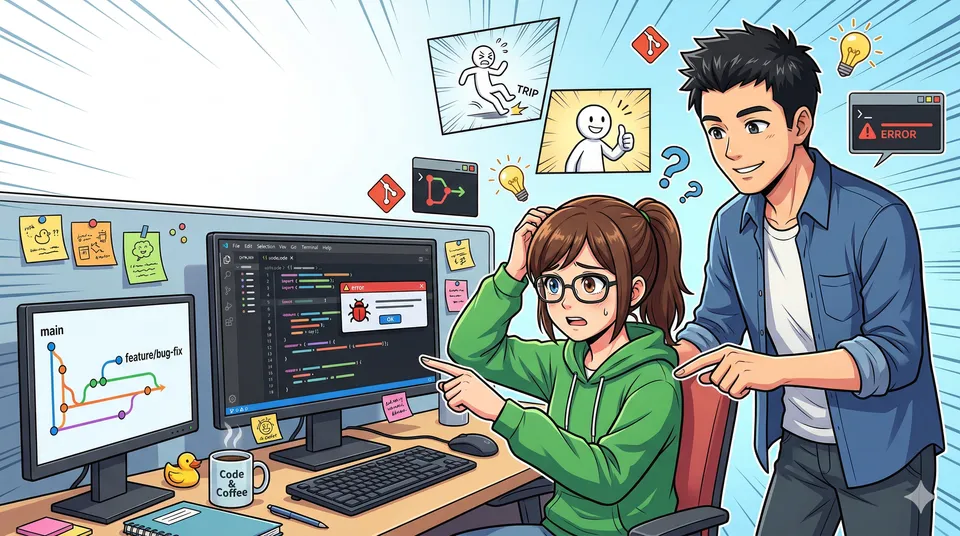
Table of Contents
- Why I changed how I mentor juniors
- Letting people fail safely
- Giving tasks that stretch, not stall
- Stepping back before stepping in
- What I look for now
- Closing thought
“This task is for you to learn. Don’t be afraid to break things. Just make sure you fix what you break, and tell us what you learned.”
That sentence became the center of how I mentor junior developers.
I learned this playbook while supervising a university lab team. The goal was never just to keep the apps alive. It was also to turn nervous newcomers into people who could actually carry the work.
1 · Why I changed how I mentor juniors
When the senior members graduated, I inherited a handful of juniors and a stack of campus apps to keep alive.
The mandate was simple: maintain the software and grow the next wave of maintainers.
That meant I had to stop thinking only about delivery. A feature ships once. A stronger team keeps paying off.
So I shifted my mindset from doing the work myself to building an environment where people could learn by doing.
2 · Letting people fail safely
I try to make one thing clear early: mistakes are part of the process.
Unless you are writing software for aviation or medical devices, a bug usually does not mean disaster. It means something can be fixed, learned from, and explained better next time.
To keep fear low, I focus on three things:
- Reframe bugs as data points, not disasters.
- Review mistakes openly so the lesson stays with the team.
- Keep the room calm so curiosity stays higher than anxiety.
When juniors are less afraid of breaking something, they usually ask better questions and explore more on their own.
3 · Giving tasks that stretch, not stall
I never liked handing out busy work. Real tickets teach more.
My rule of thumb is the 80/20 split: give them a task they can finish 80 percent on their own, then let the last 20 percent force them to think a little harder.
That usually looks like this:
- First pull request: tweak a small UI copy text or a config flag.
- Understanding the codebase: fix a low-risk bug the team has already reproduced.
- Owning a feature: add a minor endpoint or form field, write tests, and update docs.
That last bit matters most. The stretch is where the real learning happens.
4 · Stepping back before stepping in
The hardest lesson for me was learning not to patch every bug myself.
When I did that, I saved minutes in the moment and lost hours later. The junior did not learn, and I stayed trapped as the fallback for everything.
Now I use a simple intervention flow:
- Observe silently while they search docs, try things, or talk through the issue.
- Step in only if they ask for help or if they have been stuck for about 30 minutes.
- Guide with questions instead of jumping straight to the answer.
Questions like, “What does the stack trace actually say?” or “Have you checked the official docs first?” usually move things forward without taking ownership away from them.
Before they ask me, I want them to check:
- Internet search
- Official documentation
- AI assistants, if they help with hints and not as a crutch
5 · What I look for now
I do not judge success by whether the feature shipped by brute force.
I look for signs that the person is getting more independent:
- Thoughtful questions: they dug into the problem before asking for help.
- Explanation instead of copy-paste: they understand why the fix works.
- Peer trust: teammates are willing to hand them more responsibility.
6 · Closing thought
Your project is not just a backlog. It is a training ground.
Give juniors space to trip, then give them the tools to understand the fall. You will end up with stronger engineers, a healthier codebase, and a lot less burnout for yourself.
If you have your own mentoring tricks, send them my way. I am always happy to swap stories.